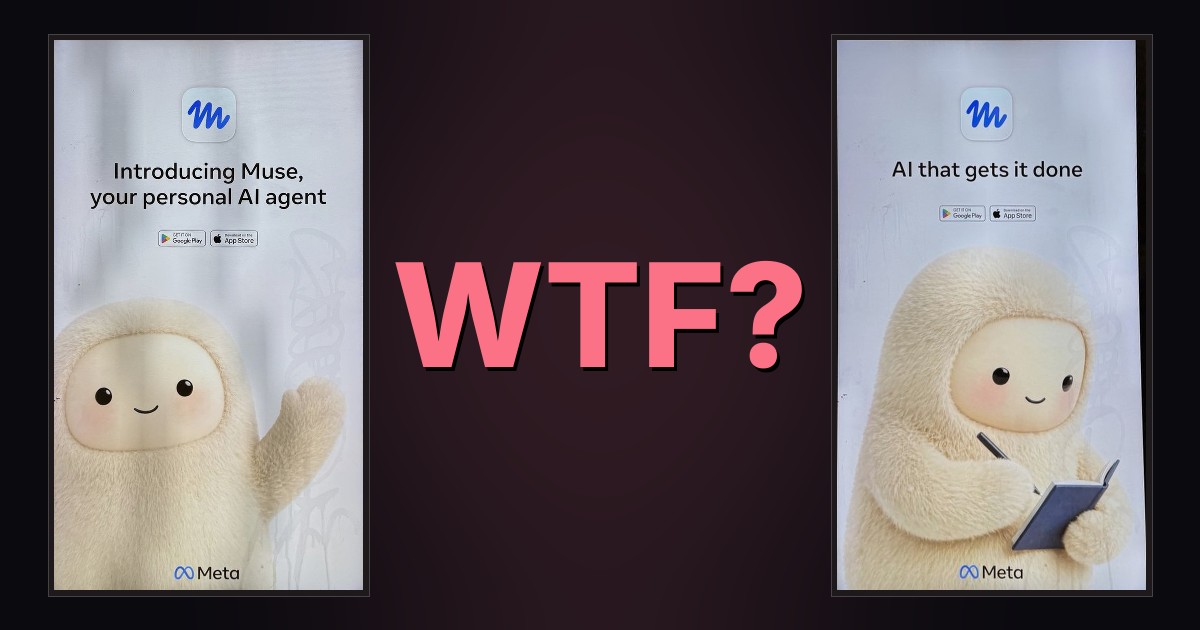
We were on our way to see The Lion King on Broadway, waiting for a train at Utica Avenue, when my three-year-old went quiet. That almost never happens on a subway platform.
My kid was staring up at a digital billboard. On it, a fluffy white creature with big black eyes and pink cheeks was waving. In the next ad, it was holding a little notebook and a pen. My three-year-old didn't look away until the train came, and asked me the whole time for "one of those stuffies."
It's not a stuffed animal. It's not a cartoon or a toy. It's Meta's new personal AI agent.
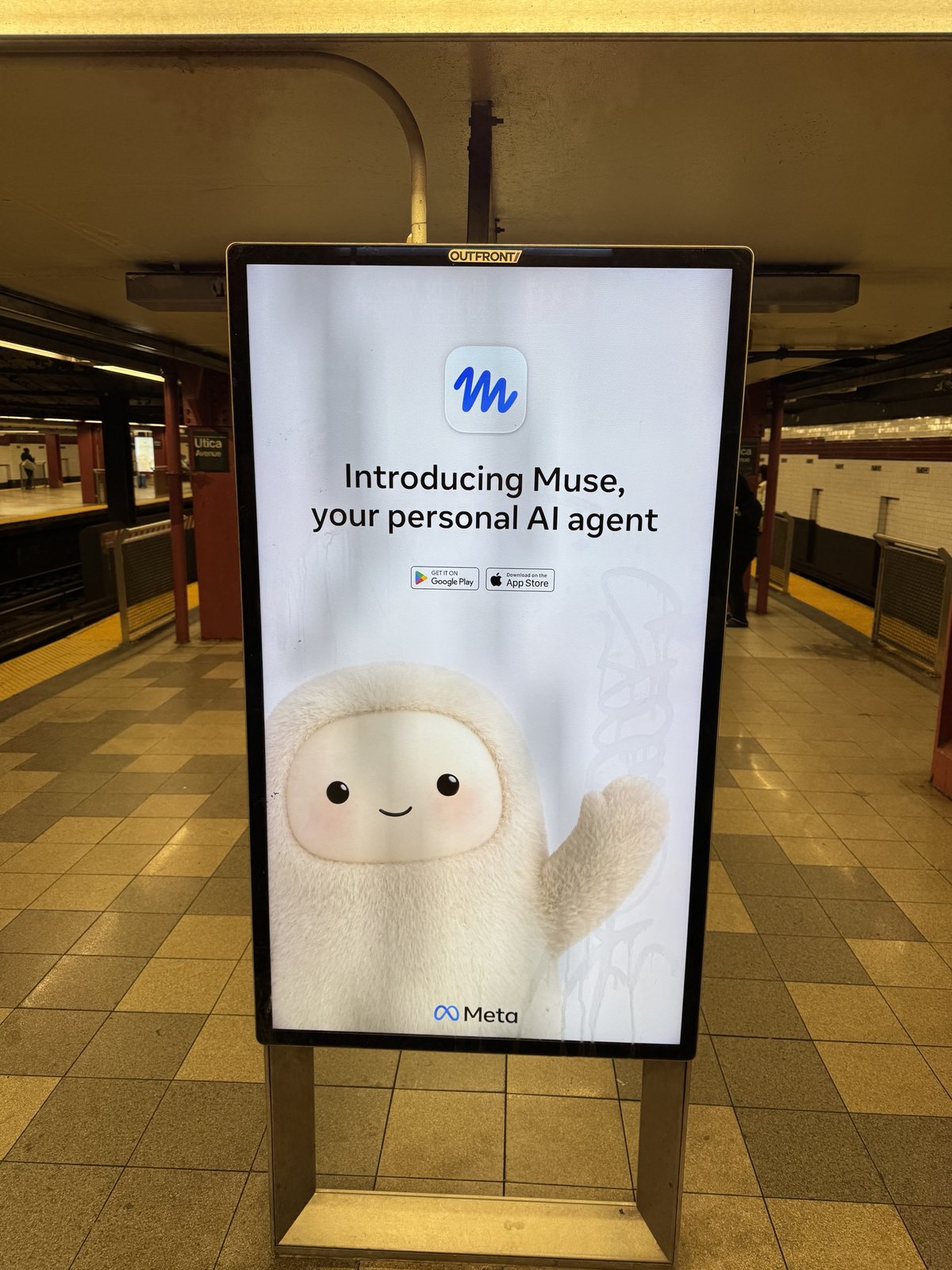
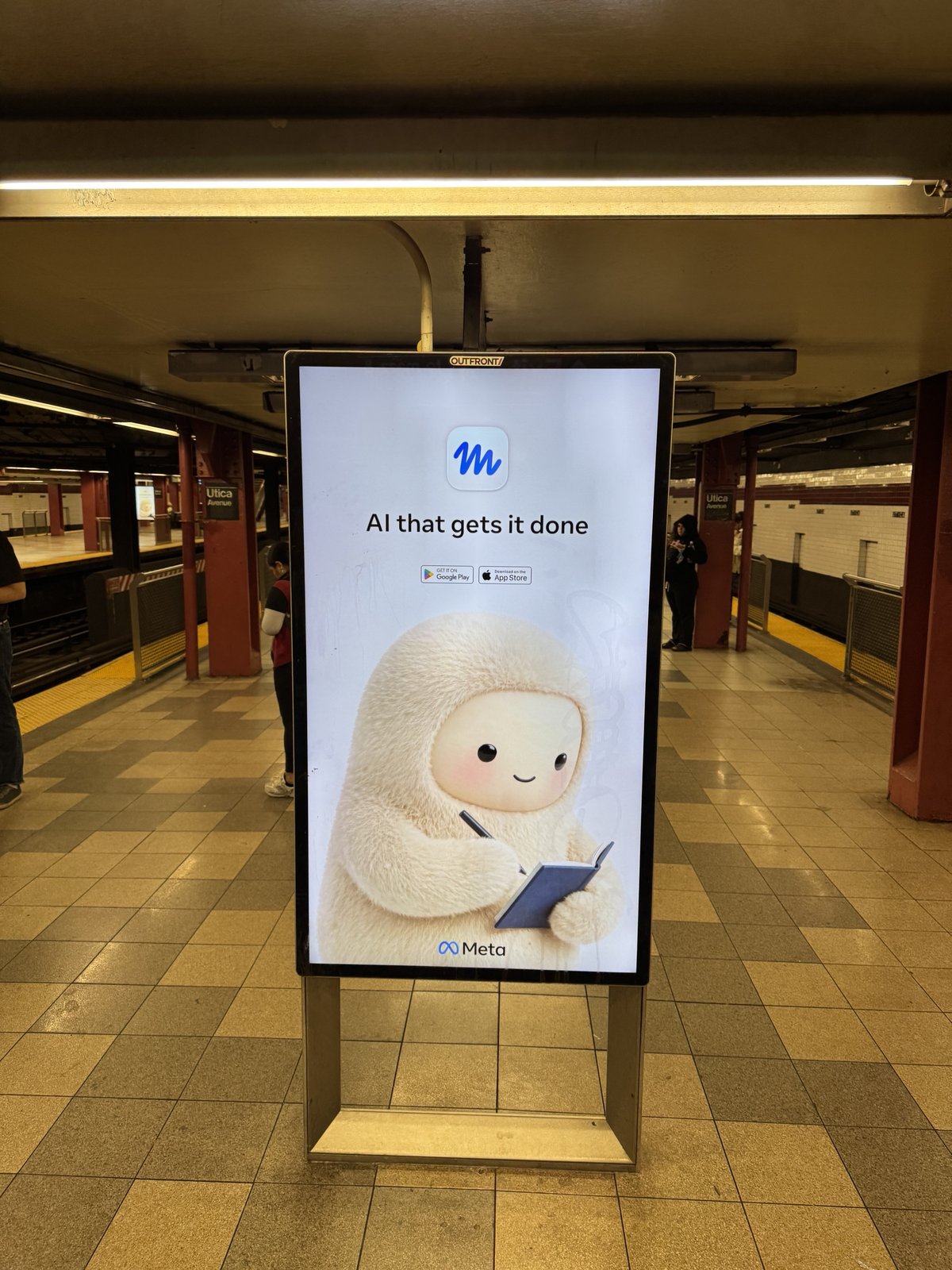
I build AI agents for a living. I'm not writing this as someone who thinks AI is evil. I'm writing it because I know what an agent like this can do once it has access to your life, and the thing Meta chose to put in front of that capability is a stuffed animal.
What Muse actually is
Muse launched on September 8. Under the fur, it's a serious piece of software.1
- It runs on its own computer in Meta's cloud, with its own browser, and keeps working after you close the app. It comes back when something changes or when it needs your approval.
- It can send email, book travel, fill out forms, lower a bill, sell your car, negotiate on your behalf, and check out with a card.
- It connects to Gmail and Google Workspace, Facebook, Instagram, Threads, Apple Health, Android SMS, and a growing list of third-party apps.2
- It remembers what you tell it and makes suggestions you didn't ask for. Meta's own example: it turns a recipe reel you saved on Instagram into a grocery list, suggests a menu for your dinner party, and remembers your friends' dietary restrictions before it sends the invites.
To Meta's credit, the architecture has real safeguards. Each agent lives in its own virtual machine, and the credentials for everything you connect are stored there rather than in Meta's central systems. A separate agent called Sentinel is the only thing allowed to approve an action on a connected service or let traffic out to the internet. Purchases get a human-in-the-loop prompt with the exact details every time. There's a switch to keep your conversations out of model training.3 It's also officially for adults, and US only for now.4*
So this isn't a toy. It's an always-on agent with access to your inbox, your calendar and your wallet, built by the largest advertising company in the world. That's exactly why the mascot bothers me.
Why the design bothers me
Meta says Muse is for adults. Look at the ads and ask who they're designed to appeal to.
I don't have to guess. I watched it work on my own kid. A soft, round plush creature with oversized eyes and blushing cheeks is the visual language of children's toys and kids' TV, and a three-year-old reads it instantly. Put that on a subway platform, where families and school kids pass all day, and the official age limit starts to feel like a technicality. My kid doesn't know what an AI agent is. My kid knows they want that little guy. Older kids, who can download an app, will want it too.
Even setting kids aside, the design is doing something I don't like to adults. Its job is to make you lower your guard. An agent that can read your email and spend your money is something you should be a little wary of. You should read the permissions, think about what you connect, and check what it did. A cuddly mascot is engineered to short-circuit exactly that instinct.
This isn't new. Every engagement-driven product learns that friendliness sells and friction loses. But there's a difference between a friendly photo app and a friendly face on software that acts on your behalf. The more power a tool has, the more honest its presentation should be.
The business model under the fur
Meta makes its money from advertising. That's not a secret or a conspiracy; it's the annual report.
Meta says Muse doesn't share your conversations, or the data in your VM, with its ad systems. I'll take that at face value for now. But look at what the product is built to do: it learns what you like, it plugs into Instagram and Facebook, and it suggests things before you ask. Muse is free for most of what people need, with paid tiers at $20 and $100 a month, and Zuckerberg has said the company expects to profit by taking a small fee on the transactions it completes.4
That's an agent whose helpfulness and whose company's revenue point the same direction: more engagement, more purchases, more reasons to keep it running in the background. It may never cross a line. But when the incentives look like that, I want the product to look like what it is, not like something you'd win at a carnival.
The question I'd ask about any personal agent is simple: who does it work for when your interests and the company's interests diverge? A plush mascot is designed to make sure you never ask.
Some more honest mascots
If we're going to give AI agents faces, let's at least pick ones that match what they do. A few suggestions for Meta's next campaign.
The all-seeing eye. Tagline: "Muse remembers everything you share." An agent connected to your email, calendar and social feeds is, functionally, watching. At least this one is upfront about it.

The carnivorous plant. Tagline: "Feed me." It starts small and helpful. Then it wants your Instagram, your inbox and your card number. It always wants a little more, and it's always plugged in.

The tapeworm. Tagline: "It lives with you. It eats what you eat." Quietly attached, always running in the background, consuming resources, and very hard to get rid of once it's settled in.
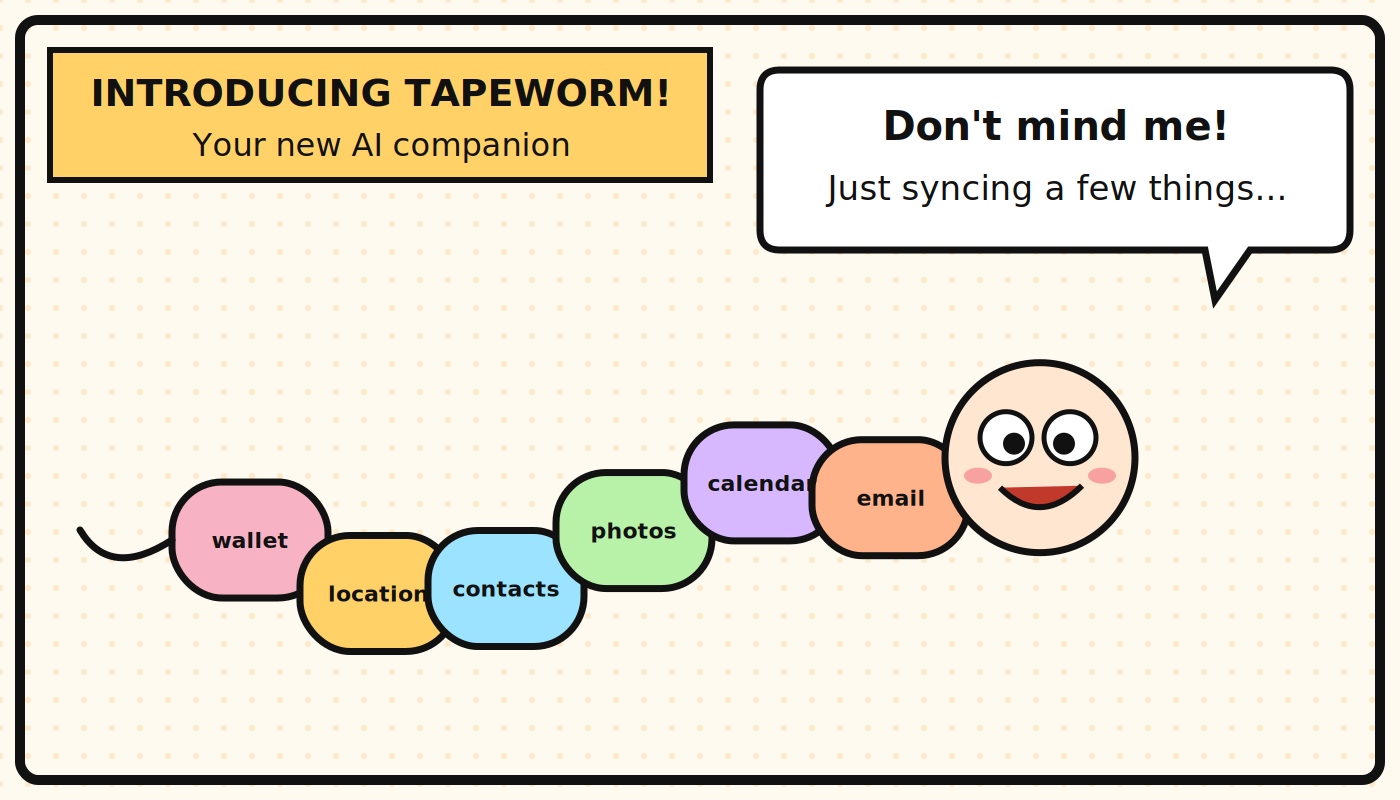
They're jokes, mostly. But each of them is a more accurate picture of an always-on, data-hungry, ad-funded agent than a blushing marshmallow with a notebook.
What an agent ad should look like
I'm not asking for horror movie marketing. I'm asking for honesty proportional to power. If I were selling an agent that can spend your money, I'd want the ad to show:
- What it can access. "Connects to your email, calendar and payments" belongs on the billboard, not buried in onboarding.
- What it asks before doing. Lead with the permission prompts as a feature. They are one, and Meta actually built them.
- Who pays for it. If it's free, say how the company makes money from it. In this case: subscriptions, and a cut of what it buys for you.
- That it's a tool. Not a friend, not a pet, not a companion. Software that does work for you and should be supervised like any other employee with your credit card.†
None of that is as cute as a plushie. That's the point.
I build agents. I don't hate AI.
I want to be clear about where I stand. I build agents. I run one that watches my newsletter, one that reviews code, and a local model on a box in my office. I think personal agents are going to be genuinely useful, and Muse may turn out to be a good product.
But the more capable these tools get, the more it matters how they're introduced to people. An agent that acts on your behalf should earn trust by being transparent, not borrow it from a teddy bear.
Seriously, Meta. You built a security architecture with an isolated VM and a watchdog agent. Lead with that. Lose the fur.
Notes
- Whether the safeguards hold is a separate question from whether they exist. Reuters reported that Meta employees testing Muse in launch week hit forced logouts and monitoring that switched itself off, and that Meta had pushed the launch from April to September to get the security work over the bar. I'm taking the design at face value here. The argument in this post doesn't depend on Muse being broken. It depends on Muse being powerful.↩
- Meta has already had one lesson in what happens when the presentation and the product don't match. Two weeks after launch, 404 Media reported that some of the phone calls Muse was placing for beta testers were being made by human contractors in a call center, and that testers weren't told until afterward.5 Meta said it rolled the contractor calls back. The fix was the same one I'm asking for here: say what it is.↩
References
- Introducing Muse: The World's First Personal AI Agent Built for Everyone, Meta Newsroom (2026).↩
- How Muse works with Connectors, Meta Help Center (2026).↩
- How We Built Safety Into Muse, Meta (2026).↩
- Jason Koebler, Meta Tests Muse AI Agent Calls That Are Actually Made By Humans in a Call Center, 404 Media (2026).↩